The Dogs of 9/11: Remembering the Search, Rescue and Guide Dogs of September 11
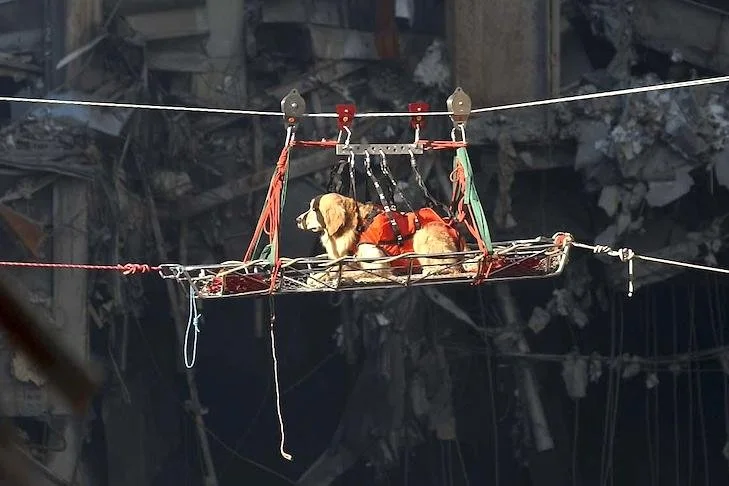
Twenty-five years after September 11, 2001, we remember the dogs who searched through the rubble, guided people to safety and worked alongside first responders during one of the darkest days in modern history.
When we remember September 11, 2001, we remember the nearly 3,000 people who lost their lives, the firefighters and police officers who responded, the survivors who escaped the World Trade Center, and the countless people who helped in the aftermath.
But among those responders were hundreds of specially trained dogs.
Search-and-rescue dogs were deployed to the World Trade Center and Pentagon, where they worked alongside their handlers searching enormous areas of debris. Other dogs played a very different role: guiding their blind owners out of the World Trade Center as the buildings were evacuated.
At Ground Zero, the Pentagon and other affected areas, dogs worked alongside their handlers through unstable debris, smoke, dust and exhausting conditions. Some searched for survivors. Others located human remains. Some helped their owners escape the World Trade Center, while others provided comfort to people dealing with unimaginable grief.
Their work was physically and emotionally demanding—and many of these dogs continued serving communities long after 9/11.
The Role of Dogs at Ground Zero
Dogs have an extraordinary sense of smell, making them uniquely suited to search-and-rescue work.
Federal Emergency Management Agency (FEMA) training materials explain that canine search teams can cover large areas relatively quickly and use their sense of smell to detect people beneath collapsed structures. Search dogs may be trained to locate living victims, while other specially trained dogs can detect the scent of human remains.
After the World Trade Center attacks, canine teams worked through the enormous debris field left by the collapse of the Twin Towers.
The conditions were unlike anything most of the dogs had previously experienced. The dogs had to navigate unstable rubble while dealing with dust, smoke, heat, noise and long working shifts. Their handlers were responsible not only for directing searches but also for monitoring the animals' health and safety.
For some dogs, the mission lasted days or even weeks.
And while the majority of the people trapped beneath the towers did not survive, the dogs' ability to search enormous areas quickly made them an important part of the recovery operation.
How Dogs Helped After 9/11
Dogs have an extraordinary sense of smell, making them particularly valuable during search-and-rescue operations.
Following the attacks, canine teams were deployed to both the World Trade Center site in New York City and the Pentagon in Arlington, Virginia.
Their work included searching collapsed structures and debris for people who might still be alive. As the recovery operation continued, specially trained human-remains detection dogs also searched for victims who had died.
The work was physically demanding. The dogs had to navigate unstable piles of concrete and steel while dealing with dust, smoke, heat and extremely long working shifts.
Their handlers were responsible for directing the searches while also monitoring their dogs for exhaustion, injury and exposure to hazardous conditions.
The dogs were not all trained for the same job, either. Some specialised in finding live victims, while others were trained to detect human remains.
And some of the most remarkable 9/11 dog stories came from animals whose role wasn't searching at all.
Apollo: The Dog Who Represented Them All
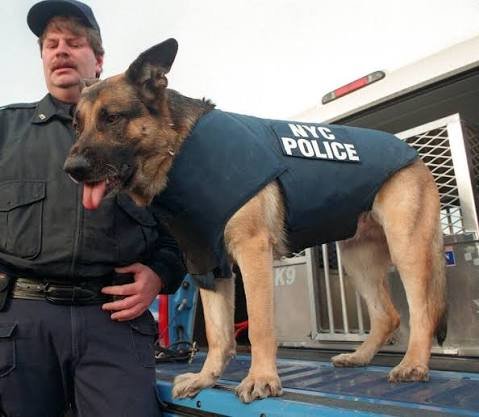
One of the most famous 9/11 search dogs was Apollo, a German Shepherd who worked with NYPD officer and handler Peter Davis.
Apollo was among the first search-and-rescue dogs to reach Ground Zero. During one search, he fell into a hole in the debris. Moments later, flames erupted from the area.
Fortunately, Apollo had been soaked with water shortly before the incident, helping protect him from serious burns. He survived and returned to work.
Apollo's story became representative of the hundreds of search-and-rescue dogs that worked in New York and at the Pentagon.
In 2002, Apollo received the PDSA Dickin Medal, one of the highest honours for animal bravery. Importantly, he received the award on behalf of the search-and-rescue dogs who worked at Ground Zero and the Pentagon following the attacks.
The PDSA described Apollo's service as demonstrating "tireless courage" and devotion to duty.
Apollo continued his career after 9/11 and died in November 2006.
Trakr and the Last Survivor Found at Ground Zero
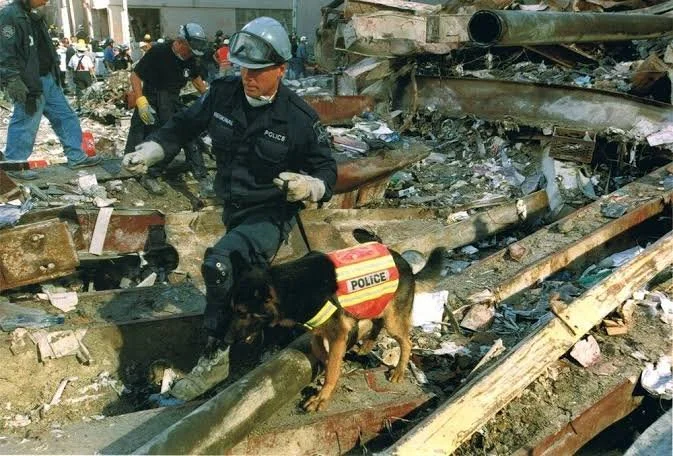
Another German Shepherd, Trakr, became one of the most widely known dogs associated with the recovery effort.
Trakr and his handler, James Symington, travelled from Canada to New York after the attacks. Trakr had actually retired from service shortly before 9/11, but he returned to work alongside his handler.
On September 12, Trakr helped locate Genelle Guzman-McMillan, a Port Authority employee who had survived the collapse of the South Tower.
Guzman-McMillan had been trapped beneath the rubble for approximately 27 hours and became the last known survivor rescued from the World Trade Center site.
The work took a toll on Trakr. He suffered from exhaustion, smoke inhalation and burns during the operation.
His story later received international attention, and Time magazine named him among history's most heroic animals.
Trakr died in 2009.
Bretagne: The Golden Retriever Who Kept Serving
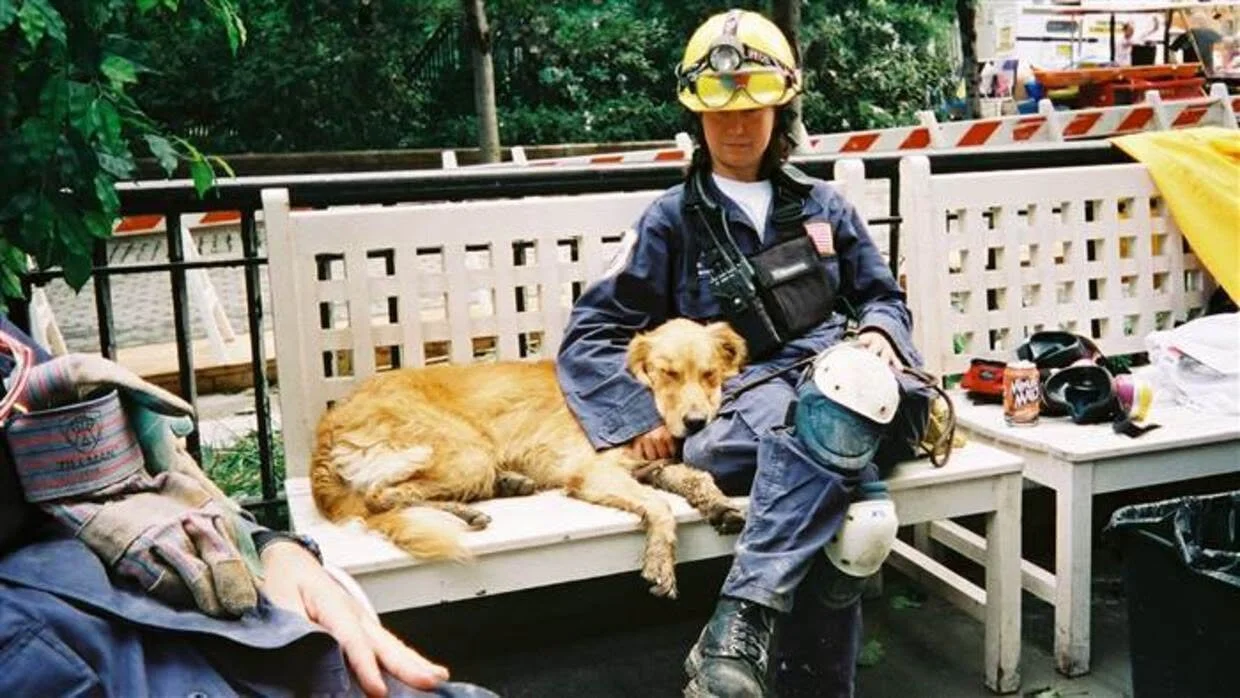
Bretagne, a Golden Retriever from Texas, was only two years old when she and her handler, Denise Corliss, were deployed to New York.
The pair spent approximately 10 days working at Ground Zero.
Bretagne was trained to search for people in disaster environments, but the work at the World Trade Center was unlike any assignment she had previously encountered.
And 9/11 was far from the end of her career.
Bretagne and Corliss later responded to other disasters, including Hurricane Katrina, Hurricane Rita and Hurricane Ivan. She continued working in search-and-rescue operations for years before eventually becoming a reading-assistance and therapy dog.
In 2016, when Bretagne was 15, Corliss brought her back to New York for a visit to the 9/11 Memorial. Bretagne died later that year at age 16.
Her life was commemorated with a life-size bronze statue in Texas in 2017.
Bretagne is remembered not only for what she did at Ground Zero, but for the years of service that followed.
The Emotional Toll of Ground Zero
The physical conditions at Ground Zero were extraordinarily difficult.
Dogs worked around enormous amounts of debris, smoke, dust and other hazardous material. They also faced long shifts and intense heat.
And there was another challenge that was harder to see.
Many search dogs were trained to find survivors. When they repeatedly found no living people, handlers sometimes used creative methods to keep the dogs motivated—including having people hide so the dogs could experience the reward of finding a "survivor."
The dogs could not understand the scale of the tragedy or why their searches were different from the exercises they had been trained to perform.
They simply continued doing what they had been taught to do: search for people.
What Happened to the 9/11 Search Dogs?
For many of the dogs, Ground Zero was only one part of a much longer working life.
Dogs including Bretagne, Jake and Sage continued responding to disasters after September 11.
Some eventually became therapy dogs. Others retired with their handlers and spent their final years as beloved family pets.
Many of the dogs have since died.
Their stories, however, remain part of the history of September 11.
The PDSA's 2002 ceremony at Ground Zero recognised Apollo, Roselle and Salty. Apollo received the Dickin Medal representing the search-and-rescue dogs who worked at Ground Zero and the Pentagon, while Roselle and Salty were honoured for guiding their blind owners to safety.
Remembering the Dogs of 9/11
Twenty-five years later, it is easy to think of the dogs of 9/11 only as symbols of heroism.
But they were also working animals.
They were trained, directed and protected by handlers who depended on them. They became exhausted. They were exposed to dangerous environments. And, just like the human responders, many continued serving others long after September 11.
The dogs could not understand what had happened that day.
They didn't know about terrorism, skyscrapers or history.
They knew their handlers.
They knew their training.
And when they were asked to search, they searched.
When they were asked to guide, they guided.
When they were asked to keep going, they kept going.
That is why, 25 years after September 11, the stories of these dogs deserve to be remembered alongside the countless human beings who responded to one of the darkest days in modern history.
They were not just "man's best friend." They were working partners, rescuers, guides and companions—and their service became a small but unforgettable part of the story of 9/11.